
Humans are meant to move. From walking and bending to reaching and turning, movement is the main activity to achieve every goal in life. However, as we age, reduced physical activity, joint stiffness, muscle loss, and chronic conditions can make everyday movements more challenging. Over time, the discomfort may lead to avoiding activities and a more sedentary lifestyle, which, in turn, can lead to even greater weakness.
Here, we’ll show you why mobility exercises for seniors are crucial in maintaining strength, balance, and independence in the golden years of life and what exercises you can encourage your loved one to do.
What Are Mobility Exercises For Seniors?
Unlike strength training —which is also crucial for seniors—mobility exercises are gentle, low-impact movements designed to improve how the body moves during everyday activities, like reaching for objects, walking steadily, or standing up from a chair. Common examples are hip marches to support walking, heel-to-toe raises to enhance balance, and many more.
Remember, the goal is to do them slowly without unnecessary strain on the body, focusing on comfort rather than effort.
Why Mobility Exercises For Seniors Are Important
At a glance, some of you may think, “How hard can it be? The main goal is to increase the range of movement through flexibility, balance, and coordination. But as we age, stiffness, reduced flexibility, and changes in balance can make these basic movements more challenging than they look. What once felt automatic can start to require more effort, control, and confidence.
Once performed regularly, mobility exercises can help improve your loved one’s joint stiffness, stability, and day-to-day movements. Even minor improvements can bring a sense of comfort and relief, helping them feel more confident in their own body again. That feeling of moving more freely often lifts their mood and restores a sense of independence—encouraging them to stay active, engaged, and positive in their daily life.
Safety Tips Before Starting Mobility Exercises
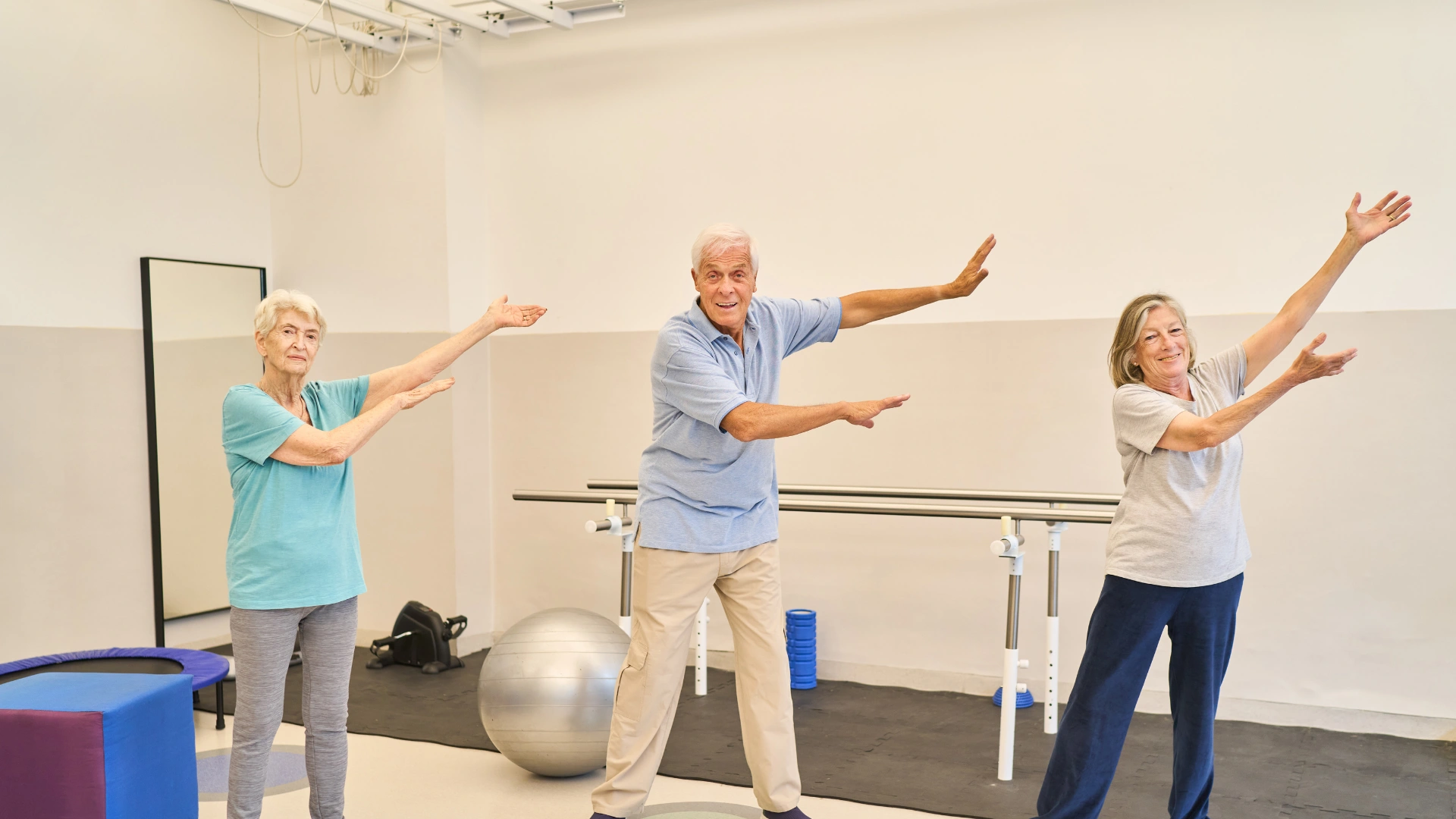
Though mobility exercises for seniors are gentle and can be done safely at home, a few simple precautions to protect your loved one from strain and injury should not be forgotten:
- Always consult with a healthcare professional if your loved one has trouble with mobility or other medical conditions
- Start gently and set a reasonable goal to avoid exercise from being forceful and painful
- Choose a clutter-free space to prevent slips or falls
- Use support like a chair or a wall for support if needed
- Stop if something feels wrong, especially when it involves pain or dizziness.
Simple Mobility Exercises For Seniors
Seated Mobility Exercises
If standing feels tiring or unsteady, seated mobility exercises for seniors are a great place to start. All your aging loved one needs are sturdy chairs and a few minutes of their time. The hows are also pretty simple:
- Start by slowly rolling the shoulders forward and backward, followed by gently turning the head from side to side and tilting it toward each shoulder.
- Next, sit up tall, slowly twist the upper body to the left and right to loosen the back.
- Add gentle seated marching by lifting one knee at a time, and finish with ankle circles or lifting the toes and heels to help improve circulation and stability.
Standing Mobility Exercises (With Support)
A great next step for aging parents who feel comfortable standing with a bit of extra support is standing mobility exercises. Using a sturdy chair, wall, or countertop for stability, these movements allow them to stay active while feeling secure:
- Same as before, start by slowly rolling the shoulders forward and backward, followed by gently turning the head from side to side and tilting it toward each shoulder.
- Next, shift weight from one foot to the other or lift one knee at a time while holding on for support to encourage hip mobility and balance.
- Finish by rising onto the toes and lowering back down, or gently moving the ankles, to help strengthen stability while standing.
Stretching Exercises To Improve Mobility
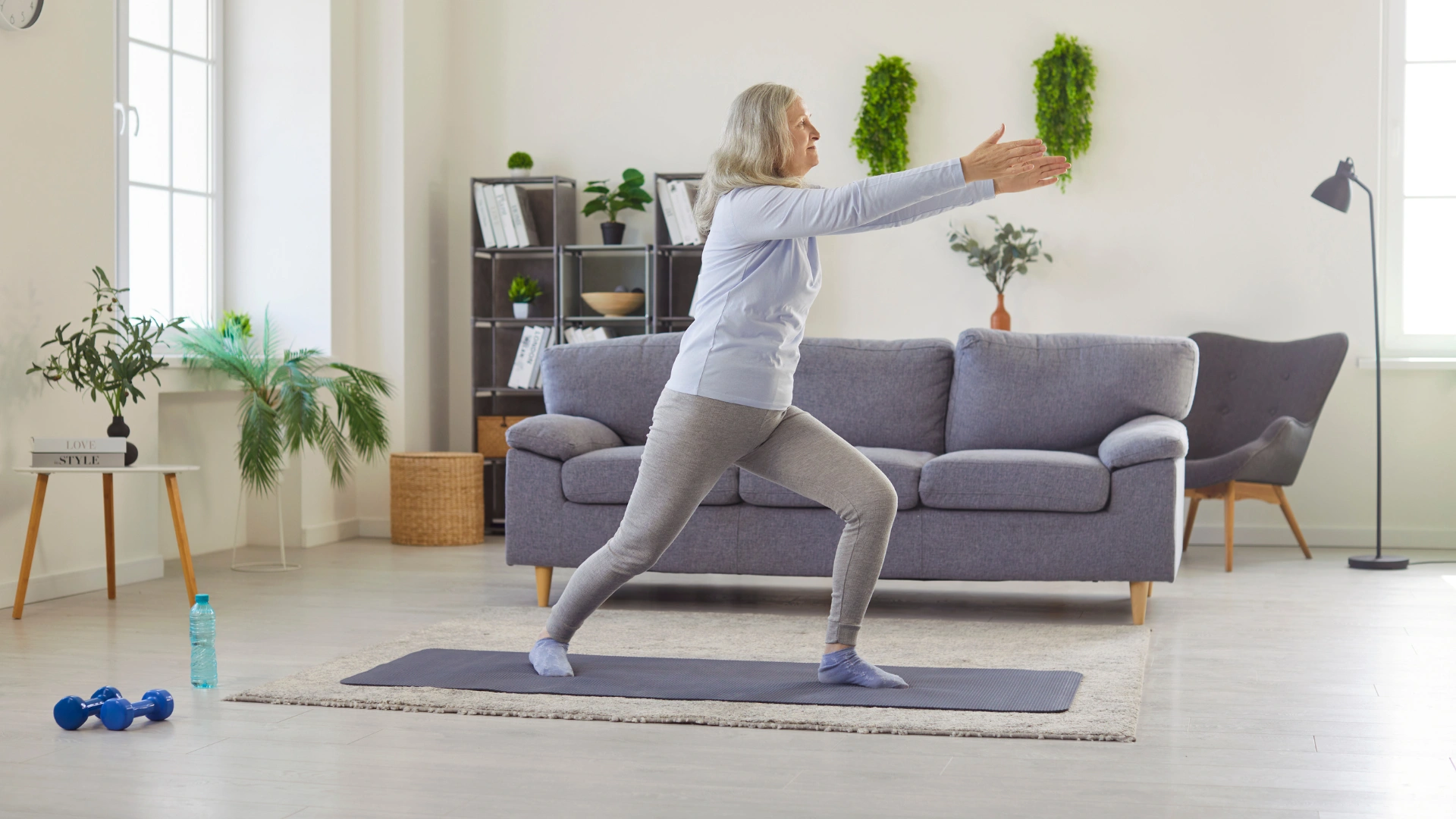
Every mobility exercise for seniors should start with gentle stretches to warm up the muscles and relieve stiffness, which is why both of the previous exercises begin with them. However, stretching doesn’t always have to be paired with other exercises. On its own, gentle stretching can still be very beneficial, especially on days when your loved one feels tired or wants to take things slow.
- Again, start by slowly tilting the head from side to side to loosen the neck, then gently stretching the shoulders and arms in whatever way feels comfortable.
- While seated or standing with support, extend one leg at a time and flex the foot to stretch the legs and calves.
- Additional simple back stretches, such as sitting tall and gently twisting or leaning forward slightly, are also very beneficial to add to the routine.
Over time, these small, gentle stretches can help your loved one feel more flexible, confident, and at ease in their daily movements.
Common Mobility Challenges Seniors Face
Unfortunately, many seniors live with chronic conditions that make moving around more difficult than it used to be. Arthritis, for example, can cause joints to become stiff, swollen, or even painful, making simple actions like standing up, walking, or reaching for objects uncomfortable. Chronic joint pain can also discourage movement, even though gentle activity is often helpful.
Other seniors may experience mobility challenges after a stroke, with weakness, stiffness, or reduced coordination on one side of the body, affecting balance and confidence when moving. Similarly, recovery after surgery—such as hip or knee procedures—can temporarily limit movement and make everyday tasks feel harder while the body heals.
These challenges don’t mean movement should stop altogether. With the proper support and gentle mobility exercises, many seniors can continue to move safely and maintain independence at their own pace.

How In-Home Care Supports Senior Mobility
We get that letting your aging loved one do these mobility exercises for seniors without someone watching over them can be a little worrying. You may be concerned about unwanted injury. To give you and your family peace of mind, professional in-home caregivers from An Answered Prayer In-Home Care can provide hands-on support, gentle guidance, and constant supervision.
Beyond all that, our caregivers can also bring encouragement and companionship. A kind word, a bit of motivation, or simply having someone there can lift your loved one’s mood and make exercise more enjoyable.
Final Thought
Staying active, even in gentle ways, helps seniors maintain not only their physical strength but also their confidence, independence, and sense of purpose. However, mobility exercises for seniors aren’t about pushing limits; they’re about preserving the ability to enjoy everyday moments, connect with others, and continue living life on their own terms.
Reach out to learn how we can support your loved one’s mobility journey with care you can trust and peace of mind you deserve.